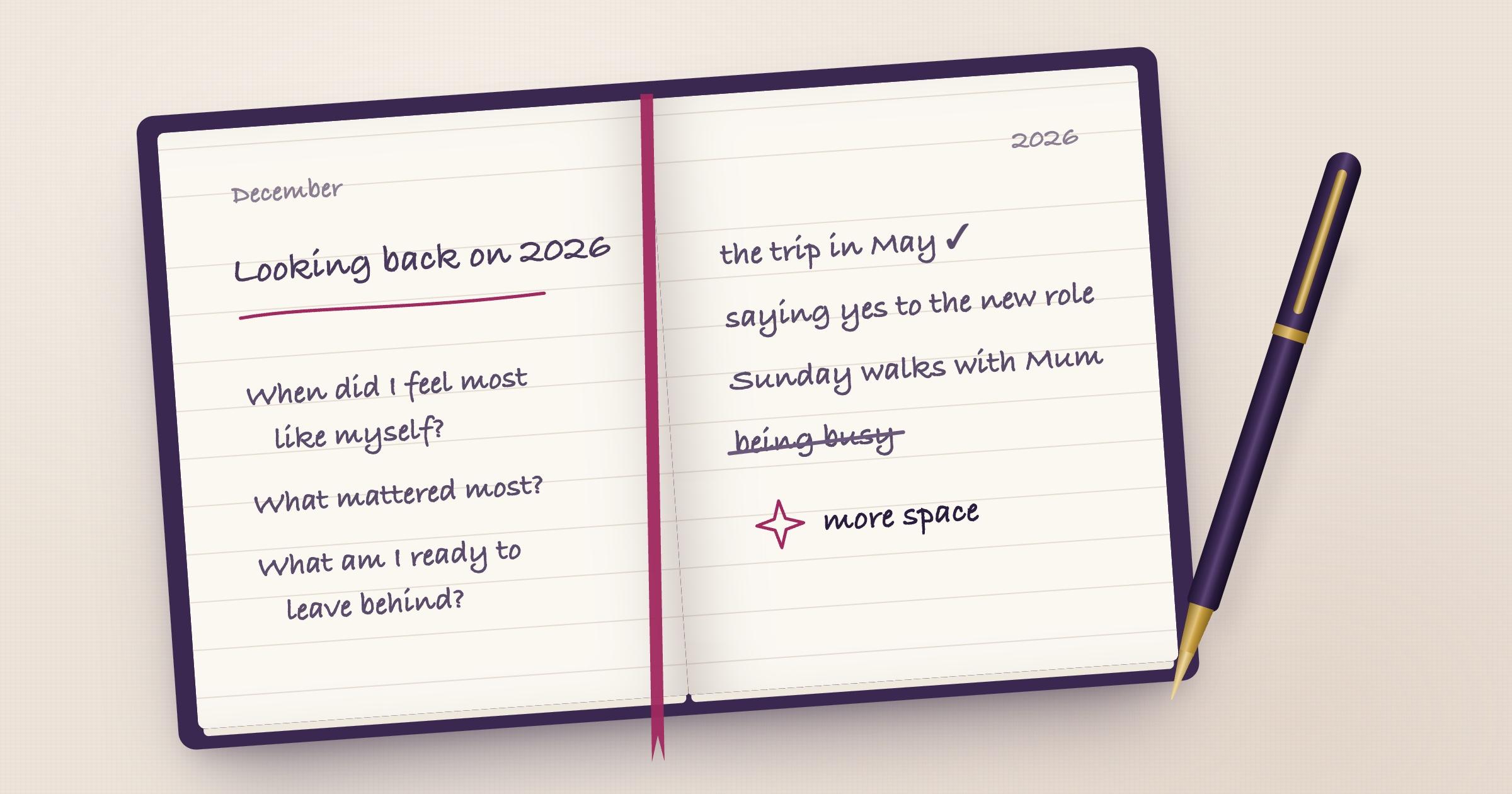
The end of the year has a way of making us look back. We remember the big milestones, the trips, the decisions and the things we said we would do.
But a year is made up of much more than its highlights. It’s also the ordinary days, the unexpected changes, the things you learned about yourself and the moments you might otherwise forget.
Taking time to reflect can help you make sense of it all. Not to judge whether you had a good year or a bad one, or to measure how much you achieved. But to understand what mattered, what changed and what you want to take with you into the next chapter.
These 40 end-of-year reflection questions are designed to help you do just that.
You don’t need to answer every question. Start with the ones that make you pause. Give yourself time to think, and don’t worry about finding the perfect answer.
Looking back: What was this year really like?
Before you start thinking about what comes next, take a moment to remember the year you actually lived. Not just the events you planned, but the experiences that stayed with you.
- What moments from this year stand out most clearly in my memory?
- When did I feel most like myself?
- What experiences made me feel genuinely alive?
- What surprised me about how the year unfolded?
- What would I like to remember about this year that I might otherwise forget?
What mattered: Where did my attention go?
Our priorities aren’t always reflected in what we say matters. Sometimes they’re revealed by how we spend our time, what we make room for and what we keep coming back to.
- What mattered most to me this year?
- Did the way I spend my time reflect what I say is important?
- Where did I feel most connected to the life I want to live?
- Where did I feel disconnected from what mattered to me?
- What did I keep wishing I had more time for?
Growth and change: What is different about me?
Change isn’t always dramatic. Sometimes it shows up in a boundary you finally set, a reaction that no longer feels familiar or something you see differently now.
- What have I learned about myself this year?
- What do I understand now that I didn’t understand at the beginning of the year?
- What feels easier than it used to?
- What belief, expectation or old story have I started to question?
- In what ways have I changed that I haven’t fully acknowledged?
Courage and choices: Where did I show up for myself?
Not every meaningful step looks impressive from the outside. Some of the most important choices are quiet, uncomfortable or visible only to you.
- What did I do this year that took courage?
- When did I choose what felt right over what was expected of me?
- What boundary did I set, or wish I had set?
- What am I quietly proud of, even if nobody else noticed?
Relationships: Who and what shaped my year?
The people around us influence how we experience our lives. Reflection can help you notice which relationships bring you closer to yourself and which ones might need more attention.
- Which people made this year better?
- When did I feel most seen, understood or supported?
- Which relationships did I invest in, and which did I neglect?
- Where did I give more than I had to give?
- Is there a conversation, connection or relationship I want to approach differently next year?
Work, creativity and ambition: What did I make possible?
Our ambitions can take many forms. They might involve work, money or creative projects, but they can also be about making space for something that matters to you.
- What did I create, build or move forward this year?
- What work or activities gave me a sense of purpose?
- What did I pursue because I genuinely wanted to, rather than because I felt I should?
- Where did I hold myself back?
- What did I start this year that I want to keep going?
The difficult parts: What do I need to acknowledge?
A meaningful reflection makes room for the parts of the year that didn’t go to plan. You don’t have to turn every difficult experience into a lesson. Sometimes acknowledging what happened is enough.
If this year held something painful, go gently. You can skip any question that doesn’t feel right to answer.
- What was harder than I expected this year?
- What drained more of my energy than I realised?
- What disappointment or loss have I not fully acknowledged?
- What do I need to stop carrying into the next year?
- What would it look like to be more understanding of myself about this year?
Looking ahead: What do I want to carry forward?
Reflection isn’t about finding a neat conclusion. It’s about noticing what you want more of, what you’re ready to leave behind and what might deserve a different kind of attention.
- What have I been putting off that deserves my attention?
- What do I want to make more room for next year?
- What do I want to do differently?
- What part of my life deserves more care or attention?
- What is one thing I don’t want to lose sight of?
- If I could carry one feeling, value or intention into the new year, what would it be?
How to make your end-of-year reflection meaningful
Answering the questions is a start. But the real value comes from taking a step back and noticing what your answers reveal.
A few ways to do that:
Look for recurring themes. Are there experiences, frustrations or desires that appear in several of your answers? You might notice that you keep writing about freedom, connection, creativity or wanting more space. These patterns can tell you something about what matters right now.
Pay attention to contradictions. Perhaps you value adventure but spent much of the year seeking stability. Maybe you wanted more connection but found yourself withdrawing. Don’t rush to resolve these tensions. They can be useful things to understand.
Notice what you’re proud of. It’s easy to focus on what remains unfinished. Make room for the decisions you made, the things you tried and the moments when you showed up for yourself.
Choose what you want to carry forward. You don’t need to turn every reflection into a goal. Some things might call for action. Others might simply deserve more attention in the year ahead.
From reflection to intention: What comes next?
Once you’ve spent time looking back, you might find that a particular theme keeps emerging.
Perhaps you want more freedom. More trust in yourself. A deeper sense of connection. Or maybe you realise that something you thought you wanted no longer feels right.
This is a useful place to begin thinking about your Word of the Year.
Rather than choosing a word because it sounds inspiring, let it emerge from what you’ve noticed about your actual life. Your reflections can help you find a word that represents how you want to live, not just what you hope to achieve.
If you’d like to explore that next step, read How to Choose Your Word of the Year for 2027 (And Make It Mean Something).
Keep the thread of your year with Izel
A year can pass quickly. The moments that seemed significant at the time can become difficult to remember, and the small decisions that shaped your life can disappear into the everyday.
Izel gives you a place to keep track of those experiences as they happen.
You can capture your wins, bold moves and reflections, and connect them to what matters to you. Over time, those moments give you a clearer picture of how your year unfolded, what kept coming up and how your relationship with your intentions changed.
Instead of trying to reconstruct your year from memory next December, you’ll have somewhere to return to.
Your life is happening in the moments between the milestones. They’re worth remembering, too.
30 days free. No payment details required.
Frequently asked questions
Why is end-of-year reflection important?
End-of-year reflection gives you an opportunity to look beyond the obvious milestones and understand what shaped your year. It can help you recognise patterns, acknowledge changes, celebrate what mattered and make more considered choices about what comes next.
When should I do my end-of-year reflection?
December is a natural time to reflect, but there’s no perfect date. You might prefer to do it over a few days, revisit your answers between Christmas and New Year or take some quiet time in January. Choose a moment when you can think without feeling rushed.
How do I start an end-of-year reflection?
Start with a few open questions rather than trying to review everything at once. Think about the moments you remember, when you felt most like yourself and what mattered most. Write honestly, without worrying about making your answers sound impressive or turning everything into a lesson.
What should I do after my end-of-year reflection?
Look for themes in your answers. Notice what you want more of, what you’re ready to leave behind and what deserves your attention. You might use these insights to set intentions, choose a Word of the Year or decide on a few meaningful changes for the year ahead.
Do I need to answer all 40 questions?
No. These questions are prompts, not a checklist. Choose the ones that resonate, skip the ones that don’t and give yourself permission to return to them later. A few honest answers can be more useful than rushing through all 40.